Look Inside

Secular State: Solution or a Delusion?

Secular State: Solution or a Delusion?

A discourse on Secular Fundamentalism

Secularity, generally, stands for a way of life in which religious thinking, practice, and institutions lose their social significance. It should not be, though, confused with atheism because secularity does not stop a Christian, a Jew, or a Hindu from going to church, synagogue, or temple.

Secularity also implies substitution of traditional religious institutions, like the church, with a civil religion (Bellah, 1967). In the U.S. for example, traditionally marriage was performed in church, officiated by a cleric. The same function has been taken over by the City Hall, which verifies the blood group of the would-be bride & bridegroom and issues a marriage certificate. As an alternate way of life, secularity can be called a pseudo-religion or even a dogma, due to claiming ultimacy for the secular social reality. Secularity also stands for dualism in life.

It divides space and time into two distinct categories: secular and religious or holy. All that pertains to worship and devotion is lumped together under religion. And all that relates to trade, commerce, political struggle, human rights violation, art, and culture is defined as worldly or secular. This divide is inherent in some religious and epistemic traditions such as Christianity.

Islam does not call itself a religion or madhhab (the Arabic word used for religion). It does not separate between the so-called worldly or religious activities. Trade and commerce, farming, inventing a chemical or bio-medical cure for a problem and even fighting against violations of human rights of any people, are integral parts of din (the way of life). The uniqueness of Islam as din is the most commonly neglected aspect of Islam in the scholarly religious studies.

Islam is a kind of its own and deserves to be studied in its own right and not with a Eurocentric concept of it as an Asian religion.

Muslims as well as non-Muslims who are brought up in the Eurocentric paradigm of knowledge, based on their Eurocentric understanding of religion, first look at Islam as a religion and not as din. Then, in view of the European understanding of religion as dogma and theocracy, claim Islam should have nothing to do with the so-called secular society and state. They never realize that since their first premise is not correct, their conclusion cannot be right. This and some related confusions are the reason for this essay to emerge.

Another important factor that has contributed a lot to this confusion is the continuation of the colonial intellectual heritage among the Muslim elite. They have no idea how deeply they have been influenced due to over two hundred years of internalization of colonialism. They think and visualize with the mind of the former colonialist. Instead of applying tools of analysis, objective and critical thinking, they blindly follow the social constructs of their former political and economic exploiters.

The Algerian Muslim intellectual Bennabi (1905–1973) very appropriately calls this phenomenon colonizability, i.e., accepting wilfully or unconsciously the ways of the colonizers with pride. In Pakistan and several Muslim countries with a colonial historic baggage, the establishment, judiciary, and lawmakers, and intellectuals follow religiously the Eurocentric framework of thought, assuming no involvement of “religion” in politics, economics, and society.

Since Christianity as a religion is supposed to be a personal faith, they think Islam should also be no more than a personal faith; they assume Muslims, like their fellow Christians, may have one holy day for their rituals, while the rest of the days follow secular ways and social practices as prevalent in Europe  or America.

They are also convinced that one major reason for development in the West is its dualism of the religious and the secular. Religion to them means backwardness, rigidity and intolerance. Secularity they think brings enlightenment, progress and development.

The present essay is an attempt to first understand, as objectively as possible, the mind of the colonized elite or the neo-colonists, as Bennabi calls them. Second try to understand the nature of Islam as it is in the Qur’an and the Sunnah, and not as any Muslim or non-Muslim scholars look at it. Frequent reference is made to Eurocentric epistemology in a non-technical language. This is simply an intellectual dialogue and an exchange of understanding at a conceptual level. The author believes the difference of opinion is always a blessing.

The purpose of this discourse on “Secular State: Solution or a Delusion” is also to understand the dimensions of secularism as a pseudo-religion and a major source of tension and conflict between the neo-colonialist intellectuals and the masses. A reference is made to Pakistan in order to illustrate the concept of Pakistan as conceived by the founding fathers of the country. The author believes a healthy and dignified dialogue must continue between seekers of knowledge in order to achieve intellectual clarity and understand the impact of deep-rooted westernization and colonization on our culture, society, and political economy of Pakistan and several Muslim countries.

This essay in its initial stage was discussed with Professor Khurshid Ahmad (1932–2025), a great strategic thinker, economist, parliamentarian, and institution builder of the twenty-first-century Muslim world. He appreciated the idea and encouraged me to publish it. It is my honor to dedicate it to him because he was a mentor of a generation of young Muslim intellectuals.

I also appreciate the assistance and encouragement I received from my wife Anisa and my children Dr. Sumaiyah and Yasir in going through the manuscript and coming up with valuable suggestions. I thank Mr. Huzaifa and Mr. Mushtaq for typing and re-typing the manuscript. I am also grateful to Mr. Shahid Awan for his personal interest in undertaking the publication of this essay.

Secular State: Solution or a Delusion?

Secular State: Solution or a Delusion? is a thought-provoking book that critically examines the concept of secularism and its role in modern society. Focusing on the idea of Secular Fundamentalism, the book explores whether the secular state is truly the solution to social and political challenges or whether it has become a new ideological framework with its own assumptions and limitations.

For students of political science, comparative religion, philosophy, sociology, and international relations, this book provides an engaging discussion on one of the most debated topics of the modern world. If you enjoy reading books on politics, religion, and society, you may also like our collection of Political Science Books, Islamic Books, and History Books.

Understanding Secularism

Secularity generally refers to a way of life where religious beliefs, institutions, and practices gradually lose their influence over public affairs. However, the author carefully distinguishes secularity from atheism. A secular society does not necessarily prevent individuals from practicing their religion. Christians may continue attending churches, Jews their synagogues, Muslims their mosques, and Hindus their temples while the state remains institutionally neutral.

The book goes beyond this basic understanding and raises important questions about whether secularism itself can become an ideology that shapes public policy and cultural values in ways that deserve critical examination.

What This Book Explores

  • The meaning and evolution of secularism.
  • The relationship between religion and the modern state.
  • The concept of Secular Fundamentalism.
  • Freedom of religion and individual rights.
  • Political and philosophical debates surrounding secular governance.
  • Historical development of secular states.
  • The challenges faced by religious communities in secular societies.

Who Should Read This Book?

This book is highly recommended for:

  • Students of Political Science
  • Researchers in Comparative Religion
  • University libraries
  • Philosophy students
  • Public policy researchers
  • Academics and educators
  • Readers interested in religion and politics

The balanced discussion makes it suitable for readers seeking to understand different perspectives on secular governance rather than relying on simplified assumptions.

Why Read This Book?

Across the world, debates about secularism continue to influence constitutions, legal systems, education, and public policy. Secular State: Solution or a Delusion? encourages readers to critically evaluate these debates through historical evidence and philosophical reasoning. Instead of offering simplistic answers, the book invites thoughtful reflection on the relationship between religion, society, and state institutions.

If you are building a collection of books on political thought, governance, or comparative religion, you may also explore similar academic titles available at Bookstree.pk, including books on political philosophy, Islamic thought, constitutional studies, and international affairs.

Further Reading

Readers interested in the academic study of secularism and religion may also benefit from the following resources:

Book Highlights

  • Title: Secular State: Solution or a Delusion?
  • Subtitle: A Discourse on Secular Fundamentalism
  • Subject: Secularism, Politics & Religion
  • Category: Political Science / Comparative Religion
  • Language: English
  • Ideal For: Students, Researchers, Academics, and General Readers

If you are looking for a well-researched book on secularism, religion and politics, or modern political philosophy, Secular State: Solution or a Delusion? is an excellent addition to your personal or academic library. Order your copy today from Emel.com.pk.

Weight 1 kg
Author

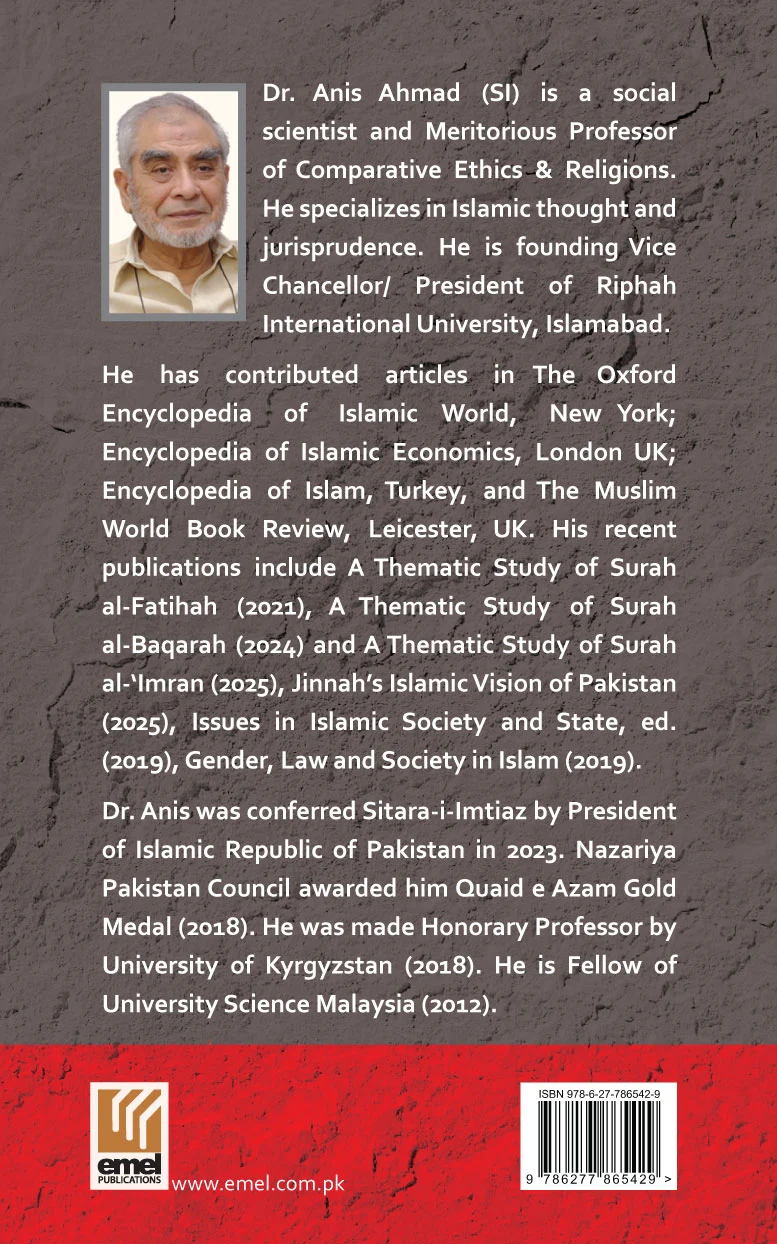
Dr. Anis Ahmad

Reviews

There are no reviews yet.

Be the first to review “Secular State: Solution or a Delusion?”

Your email address will not be published. Required fields are marked *

Editorial Review

Secular State: Solution or a Delusion?

A discourse on Secular Fundamentalism

Secularity, generally, stands for a way of life in which religious thinking, practice, and institutions lose their social significance. It should not be, though, confused with atheism because secularity does not stop a Christian, a Jew, or a Hindu from going to church, synagogue, or temple.

Secularity also implies substitution of traditional religious institutions, like the church, with a civil religion (Bellah, 1967). In the U.S. for example, traditionally marriage was performed in church, officiated by a cleric. The same function has been taken over by the City Hall, which verifies the blood group of the would-be bride & bridegroom and issues a marriage certificate. As an alternate way of life, secularity can be called a pseudo-religion or even a dogma, due to claiming ultimacy for the secular social reality. Secularity also stands for dualism in life.

It divides space and time into two distinct categories: secular and religious or holy. All that pertains to worship and devotion is lumped together under religion. And all that relates to trade, commerce, political struggle, human rights violation, art, and culture is defined as worldly or secular. This divide is inherent in some religious and epistemic traditions such as Christianity.

Islam does not call itself a religion or madhhab (the Arabic word used for religion). It does not separate between the so-called worldly or religious activities. Trade and commerce, farming, inventing a chemical or bio-medical cure for a problem and even fighting against violations of human rights of any people, are integral parts of din (the way of life). The uniqueness of Islam as din is the most commonly neglected aspect of Islam in the scholarly religious studies.

Islam is a kind of its own and deserves to be studied in its own right and not with a Eurocentric concept of it as an Asian religion.

Muslims as well as non-Muslims who are brought up in the Eurocentric paradigm of knowledge, based on their Eurocentric understanding of religion, first look at Islam as a religion and not as din. Then, in view of the European understanding of religion as dogma and theocracy, claim Islam should have nothing to do with the so-called secular society and state. They never realize that since their first premise is not correct, their conclusion cannot be right. This and some related confusions are the reason for this essay to emerge.

Another important factor that has contributed a lot to this confusion is the continuation of the colonial intellectual heritage among the Muslim elite. They have no idea how deeply they have been influenced due to over two hundred years of internalization of colonialism. They think and visualize with the mind of the former colonialist. Instead of applying tools of analysis, objective and critical thinking, they blindly follow the social constructs of their former political and economic exploiters.

The Algerian Muslim intellectual Bennabi (1905–1973) very appropriately calls this phenomenon colonizability, i.e., accepting wilfully or unconsciously the ways of the colonizers with pride. In Pakistan and several Muslim countries with a colonial historic baggage, the establishment, judiciary, and lawmakers, and intellectuals follow religiously the Eurocentric framework of thought, assuming no involvement of "religion" in politics, economics, and society.

Since Christianity as a religion is supposed to be a personal faith, they think Islam should also be no more than a personal faith; they assume Muslims, like their fellow Christians, may have one holy day for their rituals, while the rest of the days follow secular ways and social practices as prevalent in Europe  or America.

They are also convinced that one major reason for development in the West is its dualism of the religious and the secular. Religion to them means backwardness, rigidity and intolerance. Secularity they think brings enlightenment, progress and development.

The present essay is an attempt to first understand, as objectively as possible, the mind of the colonized elite or the neo-colonists, as Bennabi calls them. Second try to understand the nature of Islam as it is in the Qur'an and the Sunnah, and not as any Muslim or non-Muslim scholars look at it. Frequent reference is made to Eurocentric epistemology in a non-technical language. This is simply an intellectual dialogue and an exchange of understanding at a conceptual level. The author believes the difference of opinion is always a blessing.

The purpose of this discourse on "Secular State: Solution or a Delusion" is also to understand the dimensions of secularism as a pseudo-religion and a major source of tension and conflict between the neo-colonialist intellectuals and the masses. A reference is made to Pakistan in order to illustrate the concept of Pakistan as conceived by the founding fathers of the country. The author believes a healthy and dignified dialogue must continue between seekers of knowledge in order to achieve intellectual clarity and understand the impact of deep-rooted westernization and colonization on our culture, society, and political economy of Pakistan and several Muslim countries.

This essay in its initial stage was discussed with Professor Khurshid Ahmad (1932–2025), a great strategic thinker, economist, parliamentarian, and institution builder of the twenty-first-century Muslim world. He appreciated the idea and encouraged me to publish it. It is my honor to dedicate it to him because he was a mentor of a generation of young Muslim intellectuals.

I also appreciate the assistance and encouragement I received from my wife Anisa and my children Dr. Sumaiyah and Yasir in going through the manuscript and coming up with valuable suggestions. I thank Mr. Huzaifa and Mr. Mushtaq for typing and re-typing the manuscript. I am also grateful to Mr. Shahid Awan for his personal interest in undertaking the publication of this essay.